KH 1170 BREAD BAKING MACHINE - Bread maker BIFINETT - Free user manual and instructions
Find the device manual for free KH 1170 BREAD BAKING MACHINE BIFINETT in PDF.


| Product type | Bread machine |
| Brand | BIFINETT |
| Model | KH 1170 |
| Power supply | 230 V ~ 50 Hz |
| Power consumption | 800 W |
| Capacity | 700 to 1250 g of bread (2 levels) |
| Number of programs | 10 programs (Normal, Rapid, White, Express, Whole wheat, Cake, Dough, Bake, Jam, Soft) |
| Timer function | Yes, up to 13 hours delay |
| Browning levels | 3 levels: Light, Medium, Dark |
| Keep warm | Yes, 1 hour after baking |
| Audible signal | Yes, for adding ingredients and end of program |
| Memory backup | Up to 10 minutes in case of power outage |
| Material of the pan | Non-stick |
| Included accessories | 2 kneading paddles, bread pan, measuring cup, measuring spoon, paddle extractor, recipe book |
| Care and cleaning | Hand wash only; do not immerse the pan in water |
| Safety | Overheat protection, automatic shut-off in case of extended malfunction |
| Repairability | Repair by qualified professional; spare parts via customer service |
| Warranty | Conditions in the warranty booklet |
Frequently Asked Questions - KH 1170 BREAD BAKING MACHINE BIFINETT
User questions about KH 1170 BREAD BAKING MACHINE BIFINETT
0 question about this device. Answer the ones you know or ask your own.
Ask a new question about this device
Download the instructions for your Bread maker in PDF format for free! Find your manual KH 1170 BREAD BAKING MACHINE - BIFINETT and take your electronic device back in hand. On this page are published all the documents necessary for the use of your device. KH 1170 BREAD BAKING MACHINE by BIFINETT.
USER MANUAL KH 1170 BREAD BAKING MACHINE BIFINETT
Bread Baking Machine
KH 1170
Operating instructions
STRASSE 21·D-44867 BOCHUM
Pernass.com
70-08/06-V3
| Bread Baking Machine KH1170 | Page |
| Important information for your safety | 4 |
| Device Overview | 5 |
| Items supplied | 6 |
| Correct usage | 6 |
| Characteristics | 6 |
| Before the First Usage | 6 |
| Before baking | 7 |
| Control panel | 7 |
| Functions of the Bread Baking Machine | 9 |
| Baking bread | 10 |
| Inserting the ingredients | 10 |
| Inserting the baking mould | 10 |
| Switching on | 10 |
| Programme selection | 10 |
| Timerfunction | 10 |
| Mixing and kneading dough | 11 |
| Allowing the dough to rise | 11 |
| Baking | 11 |
| Keeping warm | 12 |
| End of the programme | 12 |
| Cleaning and Care | 13 |
| Technical data | 13 |
| Warranty & Service | 14 |
| Disposal | 14 |
| Importer | 14 |
| Temporal progress of the programme | 15 |
| Troubleshooting | 16 |
Read the operating instructions carefully before using the appliance for the first time and preserve this booklet for later reference. Hand over the manual to whomsoever you might pass the appliance on to.
Bread Baking Machine KH 1170
Important information for your safety
- Please read the operating instructions through completely before using the appliance for the first time!
- Danger of suffocation! Children can suffocate through the improper use of packaging materials. Dispose of these immediately after unpacking or store them in a place that is out of reach of children.
After unpacking, check the bread maker for signs of transport damage. If necessary, contact your supplier. - Place the appliance on a dry, flat and heat-resistant surface.
- Do not place the appliance close to gas burners, electrical cookers or other sources of heat.
- Do not place the appliance close to inflammable materials or explosive and/or ignitable gases. A minimum distance of 10cm must be maintained to all other materials.
- Ensure that the ventilation slots of the appliance are not covered.
- Before plugging the appliance in, check that the electricity type and mains voltage matches the information given on the type plate.
-
Do not lay the power cable over sharp edges or close to hot surfaces or objects. They could damage the insulation of the power cord.
-
To prevent accidents caused by tripping, the appliance is equipped with a short power cable.
- Only use the appliance inside buildings.
- Never place the appliance on or close to a gas or electric cooker or a hot oven.
- Never cover the appliance with a tea-towel or any other materials. Heat and steam must be able to escape. A fire could occur if the appliance is covered with an inflammable material or comes into contact with inflammable materials, e.g. curtains.
If you use an extension cable, ensure that the maximum permissible power rating of the cable corresponds at least with that of the bread maker. - Place the extension cable in such a way as to prevent anyone from tripping over it or inadvertently pulling on it.
Always check the power cable and the plug before use. Should the power cable of the appliance become damaged, for the sake of safety it must be replaced by the manufacturer, the manufacturer's customer service or a similarly qualified person. - The use of ancillaries not recommended by the manufacturer could cause damage. Use the appliance only for its intended purposes. Non-compliance invalidates all warranty claims.
-
Start a baking programme only when a baking mould is fitted in.
-
If children are in the vicinity, supervise the appliance particularly well! If the appliance is not in use, and also before cleaning, remove the plug from the power socket. Allow the appliance to cool down before removing individual parts.
Children should only be permitted to use electrical appliances or stand close to them when they are under the supervision of an adult. - This appliance complies with the requirements of all relevant safety regulations. Inspection, repair and technical maintenance may only be performed by qualified specialists. The warranty will become void in cases of non-compliance.
- Do not place any objects on the appliance and do not cover it during operation. Risk of Fire!
- Caution: The bread maker becomes very hot during operation. Do not touch the appliance until it has cooled down, or use oven gloves.
- Before inserting or removing ancillaries, allow the appliance to cool down and unplug the power cable.
- Do not transport the Bread Baking Machine if the baking mould contains fluid or hot contents, e.g. jams. Risk of Burns!
- Avoid coming into contact with the rotating kneading paddles during use. Risk of injury!
- Do not pull on the cable, rather, remove the plug from the socket.
- When not in use, and before cleaning the appliance, remove the power cable from the plug.
-
Do not use the Bread Baking Machine for the storage of foods or utensils.
-
Never place the bread machine in water or other liquids. Risk of fatal electrical shocks!
- Do not clean the appliance with abrasive sponge cleaning pads. Should particles break away from the sponge and come into contact with electrical components, you could receive an electric shock.
Device Overview
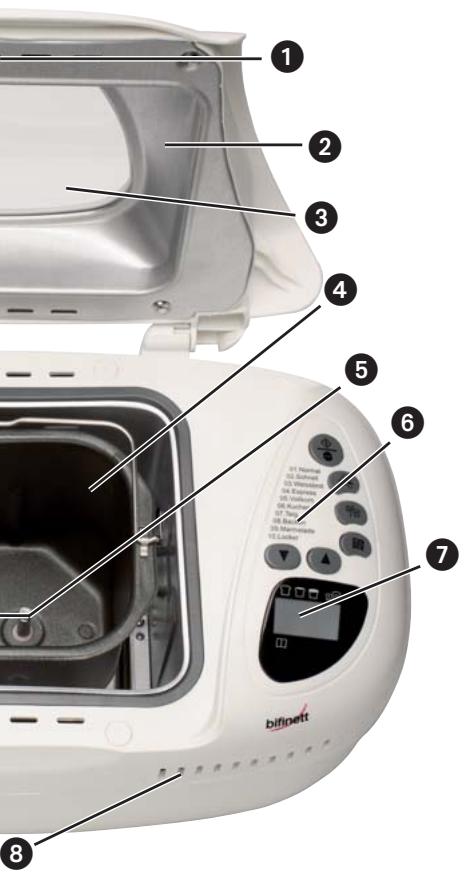
1 Handle
2 Appliance lid
Viewing window
Baking mould
Kneading paddles
Control panel
7 Display
Ventilation slots
Baking space

CAUTION! Hot surfaces!
This symbol on the lid of your bread maker warns you about the risk of burns.
Overview - Control panel
A Button - Start/Stop
Button - Level of browning
Button - Dough Volume Level I: 700 - 950 gr. Level II: 950 - 1250 gr.
Button - Select
3 Button - Time
Accessories
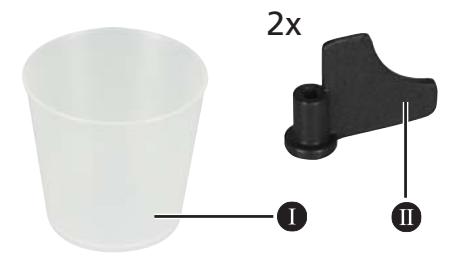
1 Measuring beaker
Kneading paddles
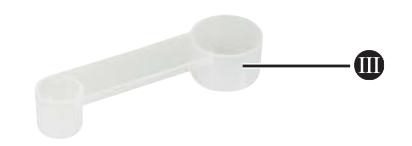
Measuring spoon
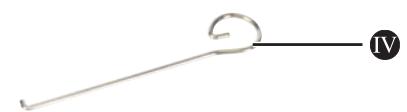
Kneading paddle remover
Items supplied
Bread Baking Machine KH 1170
2 Kneading paddles
Baking mould
Measuring beaker
Measuring spoon
Kneading paddle remover
Operating instructions
Concise instruction sheet
Order card
Recipe book
Correct usage
Use the Bread Baking Machine only for baking bread and only in domestic areas.
Do not use the appliance for drying foodstuffs or other objects.
Do not use the Bread Baking Machine outdoors.
Use only the ancillaries recommended by the manufacturer.
Non-recommended ancillaries may cause damage to the appliance.
Characteristics
With the Bread Baking Machine you have the possibility to bake bread according to your taste.
- You can choose from 10 different baking programmes.
- You can employ ready-to-use baking mixtures.
- You can knead dough for bread rolls and make jams.
Before the First Usage
Disposal of the packaging material
Unpack your appliance, remove all transportation restrainers and dispose of the packaging material as per the current regulations for your locality.
Initial cleaning
Wipe the baking mould ④ , kneading paddles ⑤ and upper surfaces of the Bread Baking Machine with a clean moist cloth before taking it into use for the first time. Do not use any abrasive materials or cleaning powders. Remove the protective foil from the display ⑦ .
Preheating
Please take note of the following notice regarding the first usage:
For the first heating up ONLY, place the empty baking mould 4 into the appliance. Close the appliance lid 2. Select the programme BAKE, as described in the chapter „Baking bread", and press the button Start/Stop A to warm up the appliance for 5 minutes. Afterwards, to stop the process press the button
Start/Stop A until a signal tone is heard. As the heating elements are lightly greased, a slight smell may occur when first putting it into operation. This is harmless and stops after a short time. Provide for sufficient ventilation, for example, open a window. Allow the appliance to cool down completely and once again wipe the baking mould 4, kneading paddles 5 and the outer surfaces of the Bread Baking Machine with a clean moist cloth.
Danger of fire! DO NOT allow the Bread Baking Machine to heat up for longer than 5 minutes with an empty baking mould. There exists a real danger of overheating.
Before baking
For a successful baking process, please consider the following factors:
- Remove the baking mould ④ from the housing before filling it with ingredients. Should ingredients drop into the baking area, a fire may be caused by them burning on the heating elements.
- Place ingredients into the baking mould ④ in the sequence specified.
- All ingredients should have room temperature, to ensure an optimal rising result from the yeast.
Measure the ingredients precisely. For this, use for example the supplied measuring implements ①. With three different scales on the measuring beaker ①, Milliliter (ml), Ounces (oz) and cups (CUP), you can measure out the ingredients in three measurement systems. Even negligible deviations from the quantities specified in the recipe may affect the baking results.
Note
Never use quantities larger than those specified. Too much dough can overflow from the baking mould ④ and, with direct contact to the hot heating elements, cause a fire.
Control panel
7 Display
Basic adjustments
The basic adjustments are shown as soon as the appliance is connected to a power source. This display signalises operational readiness. It corresponds to the programme NORMAL:
- Appearing in the display is „1 3:30". The „1“ shows which programme is currently valid, „3:30“ is the programme period in hours and minutes.
The positions of two arrows on the upper edge of the display give information about the selected level of browning (left arrow) and the volume (right arrow). The basic adjustments when switching on are: "Level II" (Bread weight 950-1250 gr) and "Medium Browning".
During operation, the programme progress can be read off from the backwards running time countdown in the display.
A Button - Start/Stop
To start and stop the programme, press the button Start/Stop A.
- As soon as the button Start/Stop A is pressed, the double-point between the time display starts to flash.
- With the button Start/Stop A you can break off the programme in any position: Hold the button Start/Stop A pressed until a signal tone can be heard. In the display 7 the begin position of the above-named start programme appears. Should you wish to use a different programme, select it with the button Select D.
Button - Time
1 Notice:
- The programmes that can be started with a time delay are listed in the table „Temporal progress of the program".
- The programmes FAST, CAKE, EXPRESS, and MARMALADE cannot be started with a time delay.
For more information see chapter „Timerfunction".
Button - Browning
With the button Browning 3 you can adjust the desired level of browning: LIGHT-MEDIUM-DARK.
This function cannot be activated with the programmes 7. DOUGH, 9. JAM and 10. LOOSE.
Button - Dough Volume
With the programmes 1. NORMAL, 5. FULL-CORN and 10. LOOSE the bread weight can be varied with the button Dough Volume :
LEVEL I = for a smaller bread weight 700-950 grams
LEVEL II = for a larger bread weight 950-1250 grams
Button - Select
Press the button to switch through the various programmes described in detail in the table, "Delayed Start of Programmes". Use the programmes for the following preparations:
1. Programme NORMAL
For white and mixed-flour bread. This programme is the most frequently used.
2. Programme FAST
For the fast preparation of white and mixed-flour bread.
3. Programme WHITE BREAD
For fast preparation of an especially loose white bread.
4. Programme EXPRESS
For all recipes of Level 1 which are to be baked in the programmes NORMAL, WHITE BREAD, FAST or LOOSE. Dough in the programme Express rises appreciably less and the breads are therefore compacter and less loose. A time preselect is not possible. With this programme please always use lukewarm fluids.
5.Programme WHOLEWHEAT
For wholewheat breads.
6. Programme CAKE
For pastries that will be baked with baking powder.
7. Programme DOUGH
For the production of dough. This programme kneads the ingredients and allows the dough to rise. It is not baked. The programme DOUGH is suitable for the production of pastry for pizza, for example.
8. Programme BAKING
For the after-baking of bread and cake. The steps "dough kneading" and "dough rising" fall away in this programme.
9. Programme MARMALADE
For making jams and preserves.
10. Programme LOOSE
For the preparation of light and airy bread.
Functions of the Bread Baking Machine
Signal tone function
The signal tone sounds
on pressing all programme buttons,
during the second kneading process in the programmes NORMAL, WHOLEWHEAT, FAST, CAKE, WHITE BREAD and LOOSE, to give notice that cereals, fruit, nuts or other ingredients can now be added to the mixture,
on reaching the end of the programme
During the keep-warm phase at the end of the baking process the signal tone sounds several times in succession.
Repeat function
Should there be an electricity power cut of more than 10 minutes the Bread Baking Machine must be started anew. This is only practicable if the dough, at the time of interruption in the programme process, had not passed beyond the kneading process.
In all other cases, one must start again from the beginning! With electricity power cuts of less than 10 minutes duration the programme continues itself automatically from the appropriate position (see chapter „Memory function").
Memory function
The programme is, with the switch-on after electricity power cuts of less than ca. 10 minutes duration, automatically continued from the same position. This memory function is intended for cases of electricity power cuts.
① Notice: Pressing Button Start/Stop A ends the programme definitively. After this button has been pressed, the programme is discontinued.
Safety Functions
If the temperature in the appliance is too high for a newly selected programme, after it has been used directly previously for another programme, on the new start there appears in the display 7 "H:HH". The signal tone sounds. Should such a case occur, press the button Stop/Start 4 until the detail "H:HH" is erased and the basic adjustments appear in the display 7 Wait for ca. 20 minutes, with the lid 2 open, until the appliance has cooled down.
Baking bread
Inserting the ingredients
- Place both of the kneading hooks onto the drive shaft.
- Place the ingredients into the baking mould ④ . The ingredients must be placed into the baking mould ④ in the placement sequence specified in the recipe. Ensure that no contamination from outside can adhere to the baking mould.
Inserting the baking mould
- Hold the non-stick coated baking mould firmly on the edges with both hands and insert it exactly into the middle of the baking space on the drive shaft.
- Carefully press the baking mould ④ downwards until it engages.
- Close the appliance lid ②.
Switching on
- Insert the power plug into a correctly installed power socket with a rating of 230V, 50Hz .
Programme selection
- Choose the desired programme with the button Selection ①.
- Choose the desired browning with the button Browning ③.
To start the programme, press the button Start/Stop A.
Timerfunction
- Choose the desired programme with the button Selection D.
- Choose the desired browning with the button Browning ③.
- With the button Time E you can delay the start of the programme.
- Add to the time details already given automatically in the respective programme the period of time, in hours and minutes, after which the programme is to commence. If necessary, take into consideration the keep-warm time of one hour (on completion of the baking process)!
The maximum time delay amounts to 13 hours.
Warning! Before you bake a particular type of bread with time delay first try out the recipe under observation, to ensure that the relationships of the ingredients to each other is correct, the dough is not too firm or too thin, or the amounts are not too large and could then possibly overflow. Danger of Fire!
Example
A standard mixed-flour bread with medium browning and a larger bread weight is to be baked during a later period of time. First of all select programme 1 (D), medium browning (B) and the dough volume Level II (C) (larger bread weight). Let us assume it is 08:00 and the bread should be ready in the evening at around 18:30, i.e. in ten hours and 30 minutes time. Press the button Time (E) until 10:30 appears, as the time period to be considered is one of ten hours and 30 minutes, between „now“ (8:00 Uhr) and the desired time of completion. With time delayed baking please do not use perishable ingredients such as milk, eggs, fruit, yoghurt, onions etc..!
To start the programme, press the button Start/Stop A.
Mixing and kneading dough
The Bread Baking Machine mixes and kneads the dough for as long as is scheduled in the baking programme (see Table).
Tip: If you remove the kneading hooks ⑤ from the dough after the last kneading process, the bread will not be torn when removing it from the baking mould ④. For this, you must interrupt the baking programme.
- To interrupt the baking programme remove the plug from the wall socket. Do not press the button Start/Stop A.
-
Open the appliance lid ② and remove the baking mould ④. With floured hands, you can remove the dough and then dismantle the kneading hooks ⑤.
-
Place the dough back into the baking mould ④ , replace the baking mould in the appliance and close the lid ② .
- Reinsert the plug into the wall socket. The baking programme will be automatically continued.
Note: The interruption may not last longer than 10 minutes! If it does, the baking programme will not be continued.
Allowing the dough to rise
After the last kneading the Bread Baking Machine creates the optimal temperature for the dough to rise. Absolutely leave the appliance lid ② closed during this period.
Baking
Danger of Burns! Never open the appliance lid 2 during the baking process.
The Bread Baking Machine automatically regulates the baking temperature and time. Should the bread still be too light on completion of the baking programme, it can be after-baked using the programme BAKING:
- Press the button Start/Stop A until the signal tone sounds and then allow the appliance to cool down for ca. 20 minutes, with the lid 2 open.
-
Press the button Select several times, to choose the programme BAKING.
To start the after-baking, press the button Start/Stop A. -
When the desired browning has been obtained, press the button Start/Stop until a signal tone is heard, the baking stops.
Note
Do not open the appliance lid 2 during the baking process. The bread could collapse.
Tip: Check the consistency of the dough after a kneading phase of 5 minutes. It should have the consistency of a soft, sticky mass. If it is too dry, add some liquid to it. if it is too moist, add some flour (1/2 to 1 teaspoon one or more times, as needed).
Keeping warm
When the baking process is complete a signal tone sounds several times to signify that the bread or other food item can be removed. In the display appears 7 , 0: 00 " . At the same time there begins a keep warm period of one hour. Excluded are the programmes EXPRESS, CAKE, DOUGH and JAM.
End of the programme
Warning
Before you open the appliance lid 2, remove the plug from the wall socket. When not in use, always separate the appliance from the power source!
- On completion of the programme remove the baking mould ④ with the help of an oven cloth.
Warning
Always use oven cloths to remove the baking mould 4 from the Bread Baking Machine.
- Place the baking mould upside down and, insofar as the bread does not immediately fall onto the grill, shift the knead drive back and forth a few times from below until the bread falls out.
Should one of the kneading hooks remain stuck in the bread, use the supplied kneading hook remover to dislodge it:
- Insert it into the round opening of the kneading hook ⑤ on the underside of the still warm bread and jam the kneading hook remover ⑨ against the lower edge of the kneading hook ⑤ .
- Then carefully draw the kneading hook ⑤ with the kneading hook remover ④ upwards. Whilst doing this one can see at which position in the bread the wing of the kneading hook ⑤ is located.
Lightly cut the bread at this position and then pull the kneading hook ⑤ out.
A Note
Do not use any metal objects which may cause scratches on the non-stick coating. Rinse the baking mould 4 with warm water directly after removing the bread. This will help prevent the kneading hooks 5 becoming stuck to the drive shaft.
Allow the bread to cool for 15-30 minutes before eating it.
Attention
Before cutting the bread always check to ensure that the kneading hooks ⑤ have been removed from it.
Cleaning and Care
Warning
Before cleaning it, always remove the power plug from the wall socket and allow the appliance to cool down completely.
Protect the appliance against splashing water and moisture, these could cause you to receive an electric shock.
Please observe the safety instructions also.
Important
The appliance and its ancillaries are not suitable for being cleaned in a dish washing machine.
Housing, lid, baking space
- Remove all residual matter in the baking space with a moist cloth or a lightly moistened soft sponge.
- Wipe also the housing and the lid, again only with a moist cloth or sponge. Ensure that the interior is completely dry.
Baking mould and kneading hooks
The surfaces of the baking mould ④ and kneading hooks ⑤ have been given an anti-stick coating. When cleaning them, do not use corrosive detergents, abrasive powders or objects that may cause scratches on the surface.
Due to moisture and vapours the surfaces of various parts may undergo changes in their appearance over a period of time. This has no influence on the function nor does it reduce the quality of the baking results.
Before cleaning, remove the baking mould ④ and the kneading hooks ⑤ from the baking area. Wipe the exterior surfaces of the baking mould 4 with a moist cloth.
Important
Never submerse the baking mould in water or other liquids.
Clean the interior areas of the baking mould ④ with warm soapy water.
Should the kneading hooks ⑤ be encrusted and it is difficult to dissolve, fill the baking mould 4 with hot water for around 30 minutes.
Should the mountings in the kneading hooks be blocked, these can be carefully cleaned with a wooden toothpick or similar.
Do not use chemical cleaning agents or solvents for cleaning the Bread Baking Machine.
Technical data
Model: Bread Maker KH 1170
Power supply: 230V~50Hz
Power consumption: 800 Watt
Warranty & Service
The warranty conditions and the service address are contained in the guarantee booklet.
Disposal

Under no circumstances should you dispose of this appliance with your domestic waste.
Dispose of the appliance through an approved disposal centre or at your community waste facility. Observe the currently applicable regulations. In case of doubt, please contact your waste disposal centre.
Importer
KOMPERNASS GMBH
BURGSTRASSE 21
D-44867 BOCHUM
www.kompernass.com
Temporal progress of the programme
| Programm Nr. | 1 | 2 | 3 | 4 | 5 | 6 | 7 | 8 | 9 | 10 | |||
| NORMAL | FAST | WHITE BREAD | EXPRESS | WHOLEMEAL | CAKE | DOUGH | BAKING | MARMALADE | FLUFFY | ||||
| Bread size* | I | II | - | - | - | I | II | - | - | - | - | I | II |
| Clock timer (max.) | 13Std. | 13Std. | - | 13Std. | - | 13Std. | 13Std. | - | 13Std. | 13Std. | - | 13Std. | 13Std. |
| Degree of browning | ✓ | ✓ | ✓ | ✓ | ✓ | ✓ | ✓ | ✓ | - | ✓ | - | - | - |
| Signal tone insert ingredients | ✓ | ✓ | ✓ | ✓ | - | ✓ | ✓ | ✓ | - | - | - | ✓ | ✓ |
| Total time hours. | 3:20 | 3:30 | 1:58 | 3:50 | 1:52 | 3:30 | 3:40 | 2:00 | 1:50 | 1:00 | 1:20 | 3:09 | 3:20 |
| All of the following time details in minutes | |||||||||||||
| Pre-heating | 17 | 20 | 5 | 22 | 3 | 37 | 40 | - | 22 | - | 15 | 11 | 22 |
| Knead 1 | 12 | 19 | 15 | 10 | 12 | 12 | 10 | 15 | 12 | ||||
| Signal tone (Insertion of ingredients) | ✓ | ✓ | ✓ | ✓ | - | ✓ | ✓ | ✓ | - | - | - | ✓ | ✓ |
| Time details in the display | ca.2:51 | ca.2:58 | ca.1:34 | ca.3:13 | ca.1:39 | ca.2:41 | ca.2:48 | ca.1:50 | ca.1:13 | - | 45 | ca.2:46 | ca.2:46 |
| Knead 2 | 6 | 6 | 6 | - | 6 | 14 | 6 | 6 | |||||
| Allow dough to rise 1 | 46 | - | 46 | - | 46 | 46 | - | 46 | |||||
| Allow dough to rise 2 | 19 | 8 | 26 | 7 | 19 | - | 45 | 19 | |||||
| Allow dough to rise 3 | 45 | 25 | 50 | 27 | 35 | - | 22 | 39 | |||||
| Baking | 55 | 62 | 55 | 65 | 65 | 55 | 62 | 96 | - | 60 | 20 | 56 | |
| Time details in the display | 0:00 | 0:00 | 0:00 | 0:00 | 0:00 | 0:00 | 0:00 | 0:00 | 0:00 | 0:00 | 0:00 | 0:00 | |
| Keeping warm | 60 | 60 | 60 | - | 60 | - | - | 60 | - | 60 | |||
- Level I = 700 - 950 g Level II = 950 - 1250 g
Troubleshooting
| What do I do if the kneading hooks 5 are stuck in the baking mould 4 after baking? | ·Fill the baking form 4 with hot water and twist the kneading hooks 5 to loosen the encrustation underneath. |
| What happens if the finished bread is left inside the bread maker? | ·Through the „Keep-warm function“ it is ensured that the bread is kept warm for ca. 1 hour and is also protected against moisture. If the bread remains in the baking machine for longer than 1 hour, it may become moist. |
| Is the baking mould 4 suitable for a dish washing machine? | ·No. Please rinse the baking mould 4 and the kneading hooks 5 by hand. |
| Why doesn't the dough get stirred, even if the motor is running? | ·Check to see if the kneading hooks 5 and the baking mould 4 have correctly engaged. |
| What do I do if a kneading hook 5 is stuck in the bread? | ·Remove the kneading hook 5 with the kneading hook remover 1V. |
| What happens if there is a power failure when a Programme is running? | ·With power failures of up to 10 minutes the Bread Baking Machine carries through to the end the last programme given to it. |
| How long does it take to bake bread? | ·Please take note of the exact times given in the table „Temporal progress of the programme“ (see page 15). |
| What size breads can I bake? | ·You can bake the following bread sizes with the baking mould 4: - Level I Bread with a weight between 700-950 gr - Level II Bread with a weight between 950-1250 gr |
| Why can fresh milk not be used with time-delayed baking? | ·Fresh products such as milk or eggs spoil if they remain in the appliance for too long. |
| The appliance crushes the added raisins. | ·To avoid the breaking up of ingredients such as fruit or nuts, add them to the dough after the signal has sounded. |
| What do I do if smoke comes from the baking space 9 or the ventilation slots 8? | ·Remove the power plug immediately! Allow the appliance to cool down, then remove the baking mould 4. Clean the exterior of the baking mould 4 as well as the baking space 9, as the smoke was probably caused by food residues. Should there be no food residues in the baking space 9 or on the exterior surfaces of the baking mould 4, do not switch the appliance back on. Make contact with the customer service department. |
| What has happened if the ingredients are not correctly mixed or the bread is not correctly baked through? | ·A false programme has been selected. ·The button Stop/Start A has been pressed during operation. ·During the baking process there was an extend power failure. ·The appliance lid 2 was opened several times during the baking process. ·The kneading hooks 5 are blocked. Remove the ingredients and do not re-use them. Remove the baking mould 4 and check to see if the drive shaft turns the kneading hooks. Should this not be so, make contact with our customer service department. |
| What has happened if the baking mould 4 springs up during the kneading process? | ·The dough is too firm, that is why the kneading hooks 5 block and the baking mould 4 is pressed upwards. Put some fluids into the dough. Immediately reclose the appliance lid 2. ·The lateral springs on the base in the housing interior have lost some of their tension. Remove the power plug from the socket. Remove the baking mould 4. Press the springs outwards. Replace the baking mould 4 and close the lid 2. Re-insert the plug into the power socket within 10 minutes. The programme will be continued. |
| Why does the display 7 show „H:HH" and the appliance doesn't allow itself to be started? | ·The appliance is still too hot from the previous baking process. Press the button Stop/Start A until the basic adjustments appear in the display 7. Allow the appliance to cool down for ca. 20 minutes, with the lid 2 open. Afterwards, the appliance can be employed as usual. |